Why Timing the Market Rarely Works
There is a fantasy that visits almost every investor at some point.
It usually arrives during periods of market uncertainty and whispers a remarkably appealing idea.
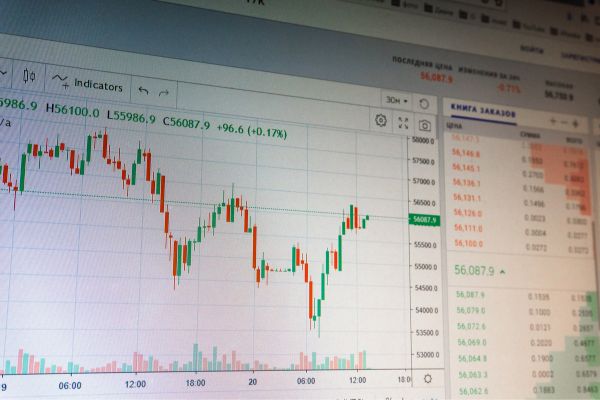
What if you could sell just before prices fall and buy back in right before they rise again?
The concept is irresistible. It promises all the rewards of investing without any of the discomfort. Losses would be avoided. Gains would be captured. Financial success would become a matter of good timing rather than patience.
Unfortunately, reality has a habit of being less cooperative.
A friend of mine once decided he was going to become a more "active" investor. After reading several articles predicting economic trouble, he moved a significant portion of his investments into cash and announced that he would wait for a better opportunity to re-enter the market.
The market promptly ignored his plans.
Instead of falling dramatically, it continued rising.
He waited.
Then waited a little longer.
Eventually, after months of watching prices climb, he reinvested at levels higher than those at which he had originally sold.
The experience taught him a valuable lesson.
Predicting markets is much easier in hindsight.
The difficulty with market timing is not simply identifying when to sell. It's identifying when to buy again. Getting one decision right is difficult enough. Getting both right consistently is extraordinarily challenging.
Professional investors, economists and financial commentators spend entire careers attempting to forecast market movements. Even with vast resources, research teams and decades of experience, their success is often mixed. The future remains stubbornly unpredictable.
This can feel frustrating because human beings naturally want certainty. We prefer the illusion of control to the reality of uncertainty. Waiting for the perfect moment seems sensible because it feels cautious.
Yet investing has a curious way of rewarding participation more often than prediction.
The older I get, the more I appreciate the value of being consistently invested rather than strategically absent. Markets rise and fall. Headlines become optimistic and pessimistic in alternating cycles. Economic forecasts change with remarkable frequency.
Meanwhile, businesses continue operating.
People continue innovating.
Economies continue evolving.
Over long periods, investors who remain patient often benefit from these broader trends.
This doesn't mean ignoring risk or pretending downturns don't exist. Market declines can be uncomfortable, particularly when retirement feels closer than it once did. The point is simply that temporary uncertainty is not the same thing as permanent loss.
One of the most useful phrases I've heard about investing is that time in the market generally matters more than timing the market.
At first, the expression sounds like a cliché.
Then you realise how much wisdom it contains.
Time allows investments to grow, recover and compound. Timing requires repeated predictions about events that nobody can reliably forecast. One approach depends on patience. The other depends on accuracy.
Patience tends to be more realistic.
Midlife often brings a welcome appreciation for this distinction. By now, most of us have learned that many worthwhile outcomes emerge slowly. Relationships deepen over time. Careers develop through experience. Health improves through consistent habits.
Investing follows a remarkably similar pattern.
Success rarely belongs to the person who predicts every twist and turn.
More often, it belongs to the person who remains committed to the journey.
Rock Your Midlife Takeaway
Trying to predict market movements is far more difficult than it appears. Consistency and patience are usually more reliable than attempting to guess the perfect moment to invest.
