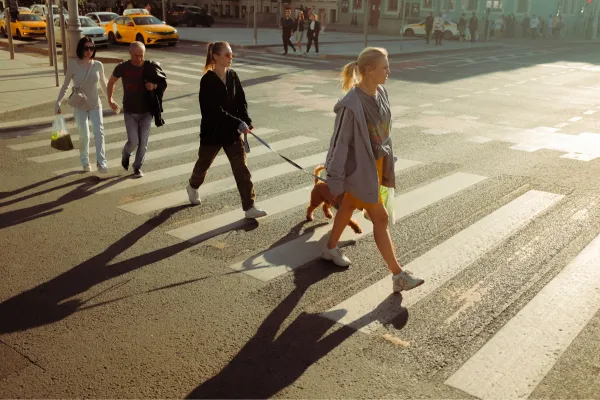
What Nobody Tells You About Walking
Walking has a public relations problem.
Because it is simple, familiar and available to almost everyone, people tend to underestimate it. It lacks the excitement of trendy fitness programmes and the impressive image associated with intense exercise. Nobody posts photographs of themselves proudly completing a leisurely stroll in quite the same way they celebrate running a marathon.
As a result, walking often gets overlooked.
Which is a shame.
Because what nobody tells you about walking is that some of its greatest benefits have very little to do with fitness.
A friend of mine began walking regularly after a particularly stressful period at work. Initially, the goal was straightforward. She wanted to become more active and improve her general health. What she didn't expect was the effect walking would have on her thinking.
Problems that seemed overwhelming at her desk became manageable outdoors.
Ideas appeared unexpectedly.
Conversations replayed differently in her mind.
Decisions that felt complicated became clearer.
The walks were changing more than her physical health.
They were changing her perspective.
The older I get, the more interested I become in activities that serve multiple purposes simultaneously. Walking is remarkably good at this. It improves fitness while reducing stress. It encourages movement while creating space for reflection. It supports wellbeing without demanding constant attention.
There is also something refreshingly uncomplicated about it.
Walking does not require optimisation.
You do not need perfect conditions.
You do not need expensive equipment.
You simply begin.
What fascinates me is how often people describe walking as a form of moving meditation. The rhythm creates a gentle mental state that is increasingly rare in modern life. We spend so much time consuming information, responding to notifications and moving between tasks that uninterrupted thinking becomes unusual.
Walking restores it.
Not by forcing concentration.
By creating the conditions where it happens naturally.
Some of my best ideas have arrived while walking.
So have solutions to problems I wasn't actively trying to solve.
Apparently, the mind appreciates a little room to wander.
Midlife often brings a deeper appreciation for this because life becomes increasingly busy. Responsibilities multiply. Free time becomes precious. Activities that support both physical and mental wellbeing start looking particularly attractive.
Walking sits comfortably in that category.
It asks very little.
Yet consistently delivers far more than expected.
Perhaps that's the secret nobody talks about.
Walking is not merely exercise.
It is a practice.
A way of creating space within a crowded day.
A way of reconnecting with your surroundings.
A way of reminding yourself that not every worthwhile activity needs to be complicated.
Sometimes the most effective solutions are the simplest.
Rock Your Midlife Takeaway
Walking offers more than physical benefits. It creates mental clarity, reduces stress and provides valuable space for reflection in an increasingly busy world.
